



One of the main concerns we hear from brands is "how do we know this won't just take sales away from our main site?"
Fair question. The honest answer is it's already happening - customers are already shopping secondhand vs. new, but you aren't benefiting in any way.
When it comes to branded resale, the math always leads to growth of the full-price business. Credit from resale comes back as full-price purchases. Resale buyers become first-time customers you'd never have reached at full price. And when you own the channel, you own the customer relationship instead of handing it to eBay or Poshmark.
With resale growing 4X faster than traditional retail, it’s now surpassing "trend" status to become a dominant part of shopping behavior (ThredUp Resale Report, 2026).
The real question is, will you be part of this shift or just sit on the sidelines?
47% - Of shoppers are more willing to shop the brand if resale is offered (ThredUp 2025 Resale Report)
46% - Browse resale before buying new; 58% of Gen Z and 55% of Millennials prioritize secondhand over new (ThredUp Resale Report, 2026)
42% - Of resale buyers are net-new to the brand (Treet Stat)
40% - Of Treet resale buyers purchase a full-price item on the brand’s main site within 6 months. Portland Leather Goods sees 70%+ convert. (Treet Stat)
372% - Average spend as a percentage of resale credit earned, spent on the main site (Treet Stat)
Where the secondhand market is heading
The global secondhand apparel market hit $257 billion in 2025 (roughly 10% of all apparel spend) and is projected to reach $393 billion by 2030. In the U.S., secondhand grew 13% last year against 3.6% for broader retail clothing – nearly four times faster!
46% of consumers now browse resale before buying new (ThredUp Resale Report, 2026).
Your customer isn't deciding between your product and someone else's. They're checking the secondhand price first, then deciding if buying full price is worth it. This behavior is already fully formed; it's just happening in spaces you don't control (or get any benefit from). Turning a blind eye to this behavior is akin to gifting your customers to someone else.
What we are seeing at Treet
The cannibalization fear rests on one specific belief: that the person buying a used version of your product was otherwise going to buy it new.
Across 200+ brands on Treet, the data doesn’t support this.
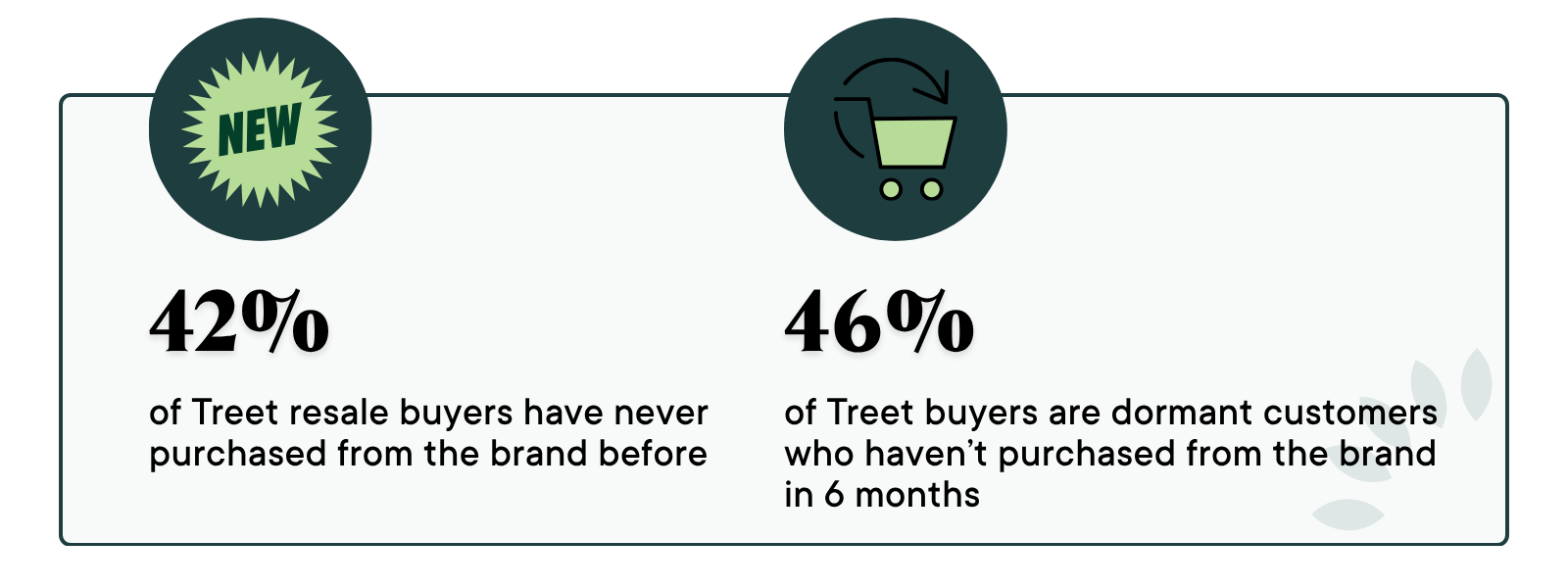
42% of Treet resale buyers have never purchased from the brand before. Not a diverted full-price customer, but rather a customer the brand wasn’t reaching.
46% of Treet buyers are dormant customers who haven’t purchased from the brand in the past six months. People who had gone quiet and now have a reason to come back. For that customer, resale isn't competing with your full-price business - it's competing with churn.
So now we understand the behavior of net new and dormant customers, but what about the rest? Some of your resale buyers are existing customers, and that's the group the cannibalization worry is really about. So we looked at their behavior as well.
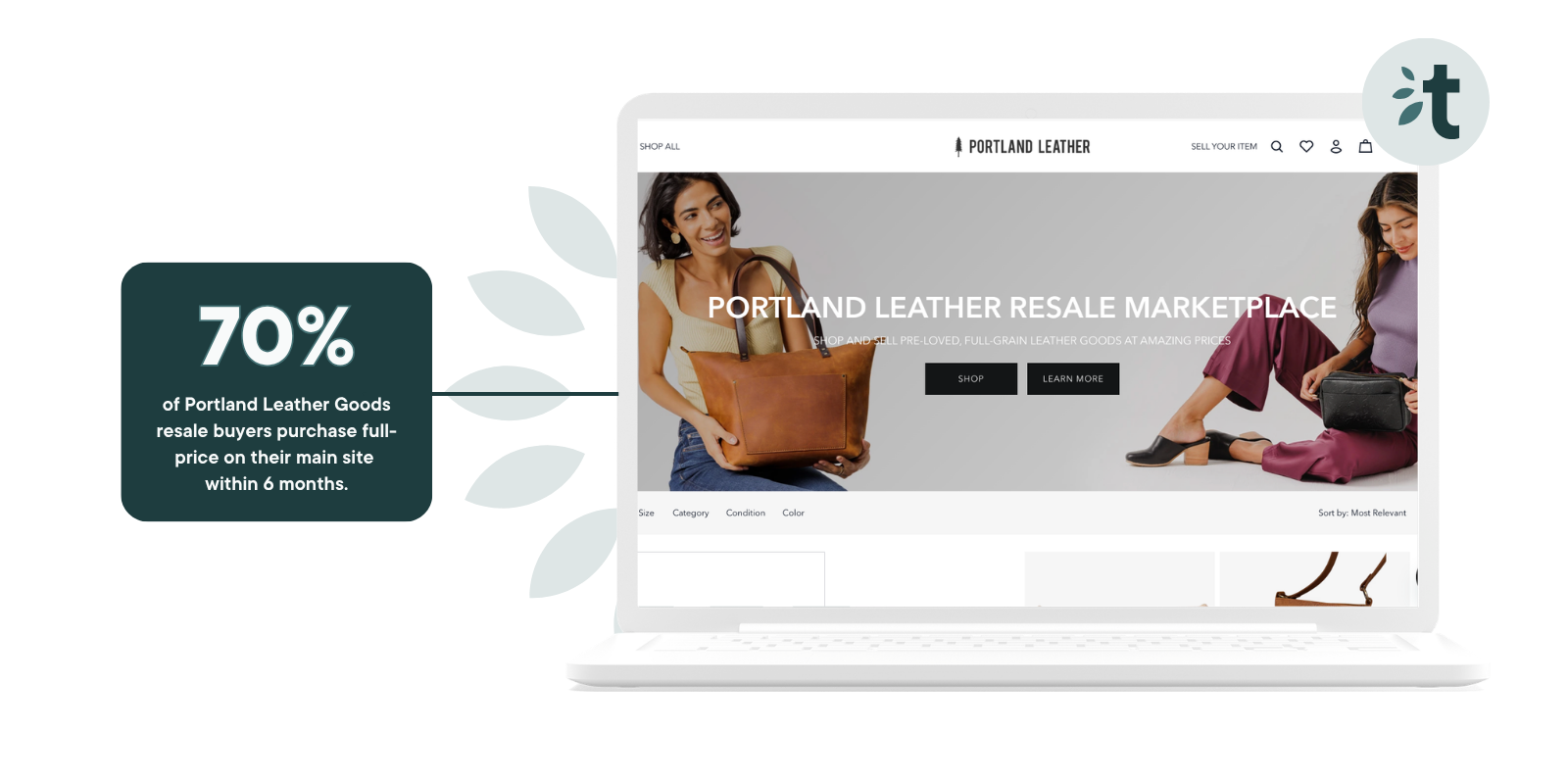
Across all partner brands, about 40% of Treet resale buyers purchase a full-price item on the brand’s main site within 6 months. Portland Leather Goods sees 70%+. The secondhand purchase isn't replacing a full-price one; it's preceding and supplementing it. Customers are buying new and pre-loved, and for an existing customer, resale is how they stay in the brand between full-price purchases instead of drifting to a competitor.
When we survey shoppers on why they buy branded resale, the #1 reason isn't price; it's access to products they can't find anywhere else, including on your own site. Past-season colorways, limited drops, the size that sold out. None of that competes with your main site, because there's no full-price version left to take the sale.
Branded Resale Fuels Full-Price Sales
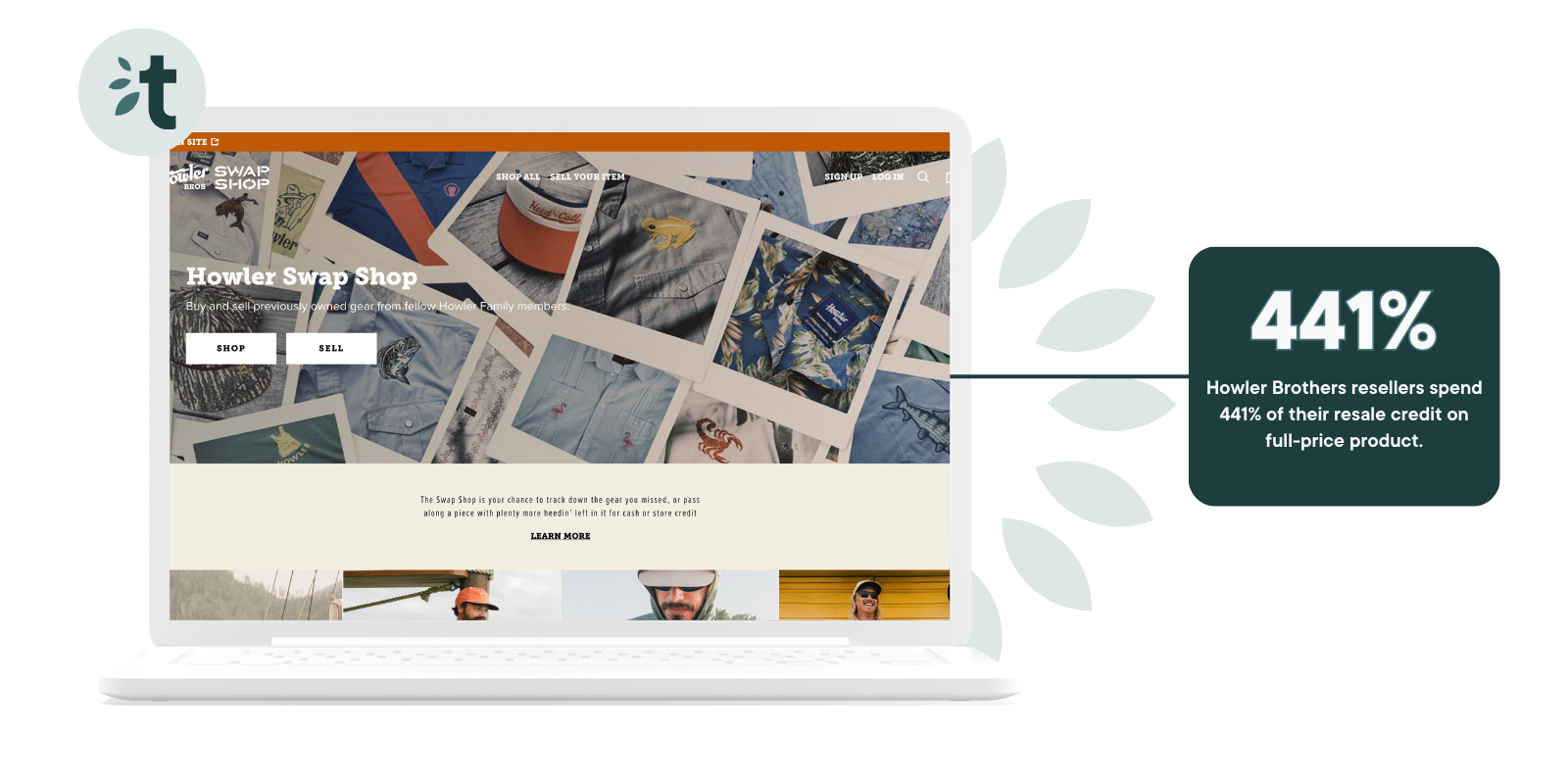
Over 70% of sellers take credit, then they spend an average of 372% of it on new products. Howler Brothers sits at 441%.
The key is that credit can only be spent on your main site. It generates a self-propelling customer loyalty loop where customers buy from you once, resell with you for credit, then spend their credit back with you (spending way more than their allotted credit).
Here’s the customer journey that our brands are seeing: a customer buys their jacket from your site, then earns $50 in credit when they sell it a year later. They spend nearly $400 when redeeming their credit. No, this is not a typo. This is the math our brands are seeing time and time again. Plus, you probably got a new customer in the process and strengthened your bond with the current one.
And the brilliant part? You didn’t pay anything out of pocket. It’s all incremental revenue.
So where does that leave cannibalization?
So yes, some of your customers are choosing pre-loved over new. That's already true today, on eBay and Poshmark, but you're not capturing a cent of it. The only variable is where that sale happens. Across 200+ brand partners, we’ve had zero reported cases of true cannibalization. What the data shows is the opposite: net-new customers, reactivated dormant ones, and higher repeat purchase rates on the main site.
Your customers are already shopping secondhand. They're checking resale before checking out. They're selling your product to each other in Facebook groups you're not in.
The real question was never whether your customers will buy secondhand. It's whether that transaction happens on your site or someone else's.


.png)


